Baltimore is experiencing an unexpected transformation in its housing market: abandoned properties that once symbolized decades of population loss, disinvestment and urban decline are increasingly attracting buyers and even generating bidding wars. The shift is helping the city reduce one of America’s most persistent vacant-housing problems while demonstrating how the broader national affordability crisis is changing the economics of once-overlooked neighborhoods.
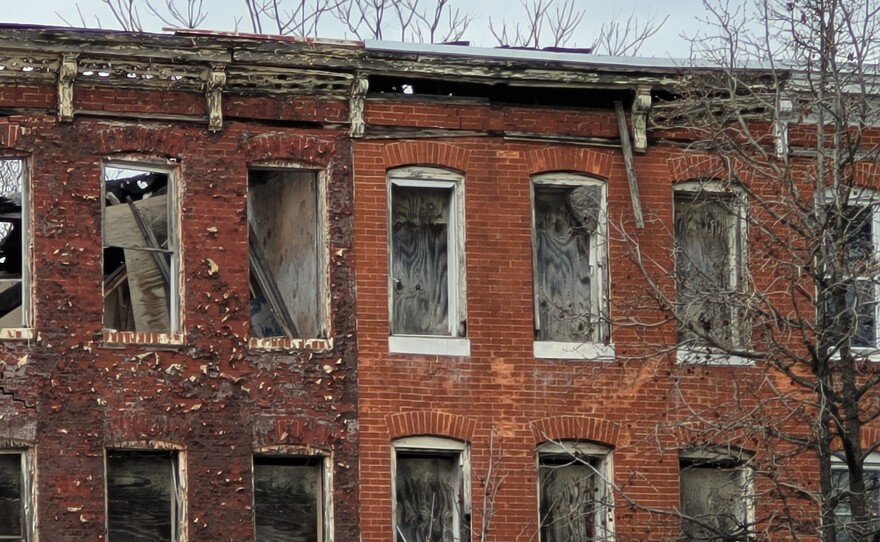
One striking example involves Chris Waldron, a plumber and part-time real-estate investor who recently competed at auction for a deteriorated Baltimore property with boarded windows and a peeling exterior. After other bidders pushed the price higher than he expected, Waldron ultimately paid $45,000. He plans to invest roughly $130,000 renovating the property over five months and hopes eventually to sell it for more than $300,000.
Not long ago, such competition would have been difficult to imagine. Baltimore spent decades struggling with more than 16,000 vacant properties. In many cases, rehabilitating an abandoned rowhouse cost more than the finished property could command on the market. That economic imbalance allowed buildings to deteriorate, contributing to fires, crime and falling property values while discouraging further private investment.
The situation is now changing. Baltimore has reduced its vacant housing stock by nearly one-third over the past decade, bringing the number below 12,000. City leaders have set an ambitious goal of eliminating the vacancy problem entirely by 2038. Maryland and Baltimore officials have committed substantial resources to the effort, including a broader $3 billion strategy involving rehabilitation subsidies, assistance for home buyers and repair grants for existing homeowners.
One of the strongest forces behind the revival is surprisingly simple: Baltimore remains affordable compared with many other American housing markets. Its median home price is approximately $235,333, according to data, compared with about $381,333 nationally. With prices significantly higher in Washington, surrounding Maryland suburbs and other East Coast markets, Baltimore is increasingly attractive to buyers searching for relatively affordable urban housing.
The pandemic also played an important role. Historically low mortgage rates brought additional capital into residential real estate and helped increase property values enough to make previously unprofitable renovation projects financially viable. Even after interest rates increased, demand continued as housing elsewhere became increasingly expensive.
Baltimore has simultaneously changed how it attacks neighborhood vacancy. Rather than spreading limited funding across the entire city and rehabilitating individual houses in isolation, officials and nonprofit developers increasingly use a “whole-blocks” strategy. Organizations acquire and restore multiple properties in concentrated areas while adding improvements such as gardens, lighting and community facilities. The objective is to reverse neighborhood decline collectively rather than house by house.
Johnston Square in East Baltimore demonstrates the potential of that approach. Nonprofit developer ReBUILD Metro has cut vacancies substantially there, while renovated homes have attracted new residents. Its proximity to downtown, Johns Hopkins Hospital and public transportation has helped strengthen demand. Longtime residents have watched abandoned blocks and former dumping areas become homes, gardens and community spaces.
Yet Baltimore’s recovery remains highly uneven. Carrollton Ridge, for example, still has roughly 750 vacant homes, more than it had a decade ago. Some communities have received far less investment, showing that the city’s broader housing crisis is far from resolved.
Speculation presents another risk. Investors can purchase inexpensive properties and hold them without renovating while waiting for neighborhood values to rise. Fraud and mortgage defaults involving vacant properties have also threatened to undermine progress in some areas.
Still, Baltimore’s transformation represents a remarkable reversal. Properties once considered economic liabilities are becoming increasingly desirable assets. The combination of public investment, concentrated redevelopment, declining violent crime and America’s broader housing affordability crisis has created conditions in which restoring abandoned homes can finally make financial sense.
Baltimore’s challenge now is ensuring that this momentum spreads beyond neighborhoods already attracting investment—and that its revival produces stable communities and affordable housing rather than simply another wave of real-estate speculation.