
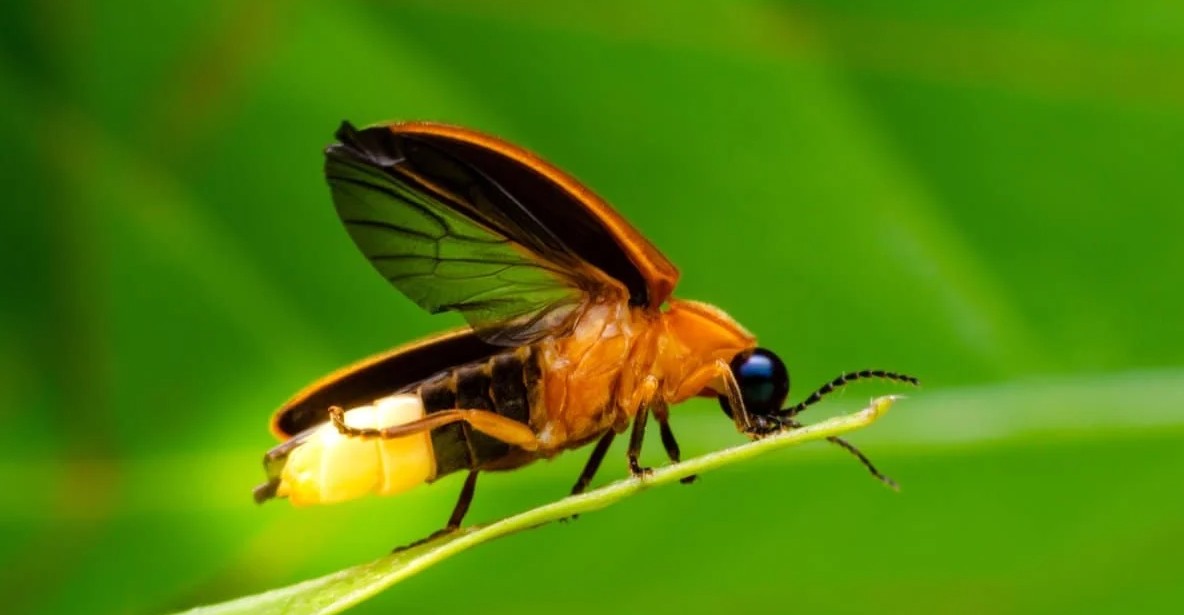
A remarkable wildlife discovery in the United States has renewed optimism among scientists and conservationists after a rare firefly species, absent from scientific records since 1983, was rediscovered in Delaware and Virginia. The insect, scientifically known as Pyractomena similis, was documented on three occasions during the spring of 2026, ending a 43-year absence from scientific observations and highlighting the importance of biodiversity conservation.
The rediscovery began on May 15, when Aljoscha Nern observed unusual fireflies in a Virginia meadow and shared his findings through iNaturalist, a platform that allows members of the public to contribute wildlife observations. Approximately two weeks later, another population was identified nearby, providing further evidence that the species had survived despite decades without documented sightings.
On June 3, Christopher Heckscher, an entomologist and ecologist at Delaware State University, made another significant discovery at Brandywine Creek State Park. During an evening survey, he noticed an unfamiliar sequence of amber-colored flashes. Subsequent microscopic examination of a collected specimen confirmed the insect’s identity, establishing the first documented presence of the species in Delaware.
The similar firefly possesses a distinctive communication pattern, producing between 10 and 20 rapid flashes before briefly pausing and repeating the sequence. These luminous signals play an essential role in reproduction, allowing individuals to attract potential mates.
Historically, the species inhabited several eastern and southern regions of the United States, including Maryland, Virginia, South Carolina, Alabama, Mississippi, and Washington, D.C. However, limited scientific research has left considerable uncertainty regarding its population, distribution, behavior, and ecological requirements.
Researchers believe that changes in land management and the disappearance of suitable natural meadows may have contributed to the difficulty of locating the insect. Agricultural expansion, frequent mowing, artificial lighting, pesticide exposure, and urban development represent broader environmental challenges threatening firefly populations.
The discovery coincides with a broader scientific investigation published in the Journal of Lost Species, identifying 28 firefly species across the United States and Canada that have gone undocumented for at least a decade. These insects represent approximately 16% of the region’s 178 known native firefly species.
Conservation organizations, including Re:wild and the Xerces Society for Invertebrate Conservation, emphasize that missing scientific records do not necessarily indicate extinction. Some species may continue to survive in isolated habitats, where limited research and monitoring have prevented their detection.
The rediscovery also demonstrates the growing importance of citizen science. By documenting wildlife encounters, ordinary individuals can provide researchers with valuable information, supporting conservation initiatives and helping identify previously overlooked populations.
Scientists hope to expand their investigations across Delaware and neighboring states to determine the species’ current distribution, population size, and conservation needs. Its rediscovery does not guarantee its long-term survival, making continued monitoring and habitat protection essential.
Ultimately, the return of Pyractomena similis to scientific records represents more than an entomological milestone. It offers a powerful reminder that biodiversity remains incompletely understood and that dedicated research, environmental protection, and public participation can contribute to preserving vulnerable wildlife and uncovering species previously believed lost to science.