
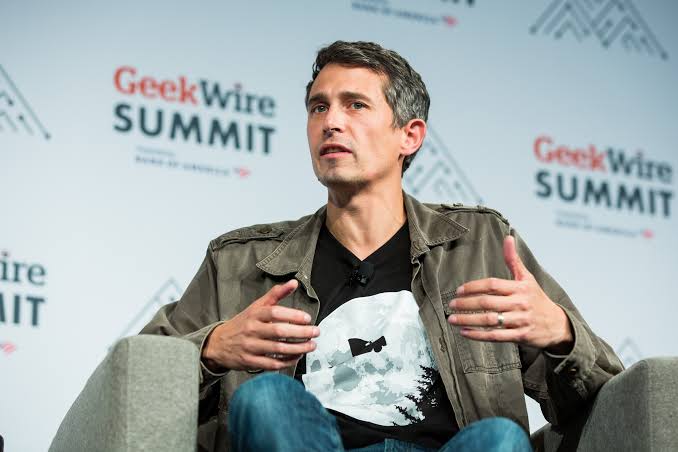
The American artificial intelligence industry is entering a new phase as Marlowe, an emerging technology startup founded by former Microsoft executives Dan Lewis and Kutta Srinivasan, has secured $277 million in seed funding. The investment values the company at $1.15 billion, establishing it as a unicorn and highlighting growing investor interest in alternatives to Nvidia-dominated computing infrastructure.
Founded in May 2026, Marlowe operates from Bellevue, Washington, and Redwood City, California. Its latest investment round was led by Accel, with additional backing from prominent venture capital firms and business leaders, including KKR co-founder Henry Kravis and Uber CEO Dara Khosrowshahi.
Marlowe primarily focuses on artificial intelligence inference, the process through which previously trained AI models generate responses, analyze information, and perform tasks. Unlike model training, inference represents the ongoing computational activity required whenever individuals or businesses use AI-powered applications.
As artificial intelligence becomes increasingly integrated into everyday life, demand for inference capacity is expanding. Applications such as virtual assistants, automated business operations, software development tools, and advanced analytical platforms require substantial computing resources to operate efficiently.
Marlowe intends to address this challenge by developing specialized infrastructure that combines different semiconductor technologies, networking systems, energy management solutions, and software architectures. Rather than relying exclusively on Nvidia, the company intends to incorporate processors developed by competing manufacturers, including AMD and Etched.
This strategy could help technology companies diversify their supply chains while reducing operational expenses. Greater competition among semiconductor manufacturers could also encourage innovation and improve the accessibility of artificial intelligence technologies.
Marlowe’s leadership believes its integrated engineering approach could deliver two to three times greater computational efficiency relative to conventional GPU cloud infrastructure. However, these projections remain company estimates that must be demonstrated through commercial operations.
The startup expects its first computing facility to begin operations in December 2026, followed by a larger installation utilizing AMD technology during the second quarter of 2027. Marlowe has already secured three customer agreements, although their identities remain undisclosed.
The company’s emergence also comes amid increasing concerns surrounding data center construction expenses, electricity consumption, financing requirements and infrastructure limitations. These challenges have encouraged technology companies to pursue solutions that maximize computational output without significantly increasing energy demand.
Lewis previously co-founded Convoy, a digital freight marketplace that reached a $3.8 billion valuation before ceasing operations in 2023. Srinivasan brings extensive technical experience in artificial intelligence infrastructure, having held leadership positions at Microsoft and other major technology companies.
Their combined entrepreneurial and engineering backgrounds provide Marlowe with experience in developing complex technology businesses. Nevertheless, the company faces considerable challenges, including established competitors, substantial capital requirements, rapidly evolving semiconductor technologies, and the difficulty of scaling specialized computing facilities.
The investment reflects a broader transformation within the American technology sector, where competition is increasingly extending beyond AI applications into the physical and digital infrastructure supporting them.
Ultimately, Marlowe’s ambitious initiative represents an effort to create a more diversified, affordable, and energy-efficient artificial intelligence ecosystem. If its technology delivers the anticipated performance improvements, the startup could become an important competitor in the global AI infrastructure market while contributing to the next generation of technological innovation and economic growth in the United States.