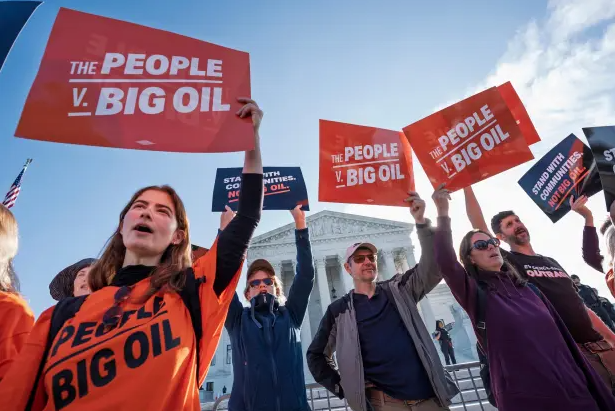
The U.S. Supreme Court is opening its new term with a major climate case that could reshape efforts by cities and states to hold fossil fuel companies financially responsible for the costs of climate change.
At the center of the dispute is a lawsuit filed by Boulder, Colorado, and Boulder County against ExxonMobil and Suncor Energy.
The local governments accuse the companies of contributing to climate change while misleading the public about the risks associated with fossil fuels. They are seeking compensation for costs tied to climate-related damage, including infrastructure repairs, environmental impacts and public-health consequences.
Exxon and Suncor deny wrongdoing and are asking the Supreme Court to end the case before it proceeds further.
Their central argument is that claims involving global greenhouse-gas emissions are governed by federal law rather than state law. The companies say the federal Clean Air Act effectively prevents states and local governments from using their own laws to impose liability for emissions produced around the country and the world.
The Colorado Supreme Court previously allowed Boulder’s claims to continue, prompting the companies to seek review from the nation’s highest court.
The stakes reach far beyond Colorado.
Nearly 60 similar lawsuits have been filed by states, cities and counties across the United States. Many accuse major oil companies of knowing for decades that fossil fuels contributed to climate change while publicly minimizing or questioning those risks.
If the Supreme Court sides broadly with Exxon and Suncor, it could provide the industry with a powerful legal argument for dismissing many of those cases.
A ruling favoring Boulder, on the other hand, could allow more state-law climate lawsuits to move toward discovery, trials and potentially large damage awards.
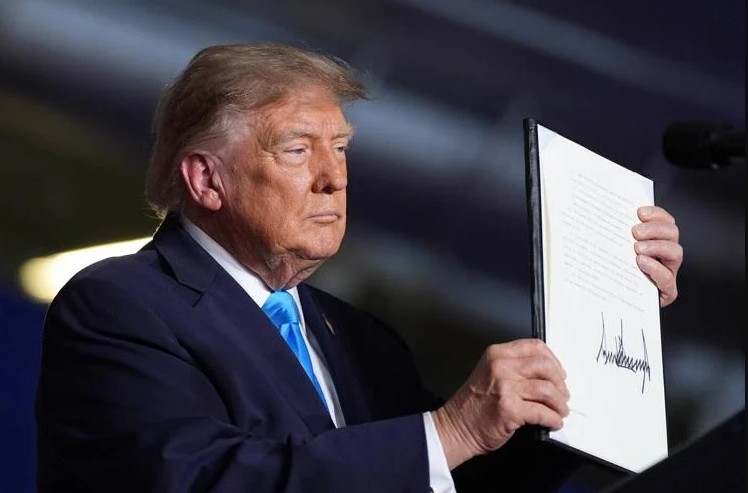
The Trump administration is supporting the oil companies’ position.
Federal officials argue that allowing individual states and municipalities to pursue climate-related claims could create a patchwork of legal standards affecting national and international energy policy.
Supporters of the lawsuits respond that the cases are not attempts to regulate worldwide emissions directly. Instead, they characterize them as traditional state-law claims involving alleged deception, consumer protection violations and compensation for local harms.
That distinction is crucial.
Fossil fuel companies have generally had greater success when climate disputes are framed as questions of federal environmental regulation. In response, plaintiffs have increasingly relied on state consumer-protection, nuisance and tort laws.
The Supreme Court has previously declined to hear some similar challenges, including an attempt by oil companies to block Honolulu’s climate lawsuit. It also rejected a separate effort by Republican-led states to stop climate cases filed by Democratic-led states.
The Boulder case, however, gives the justices a more direct opportunity to address whether federal law prevents these types of claims.
The court will hear the dispute with eight justices participating because Justice Samuel Alito has recused himself due to financial holdings connected to oil and gas companies.
The case also arrives before a Supreme Court with a 6-3 conservative majority that has issued several important decisions limiting federal environmental regulatory authority in recent years.
Still, the outcome is not predetermined.
The justices must first resolve important procedural and jurisdictional questions, including whether the case is ready for Supreme Court review at its current stage.
A final ruling is expected by the end of the court’s term, likely by June 2027.
Whatever the result, the decision could become one of the most consequential climate-liability rulings in years.
The broader question is no longer simply whether governments can regulate fossil fuel emissions. It is whether oil companies can be forced through state courts to pay for alleged deception and for the growing local costs of a warming climate.
For cities and states facing expensive adaptation measures, the answer could determine whether billions of dollars in potential climate damages remain recoverable — or whether one of the most aggressive legal strategies against the fossil fuel industry is significantly weakened.