
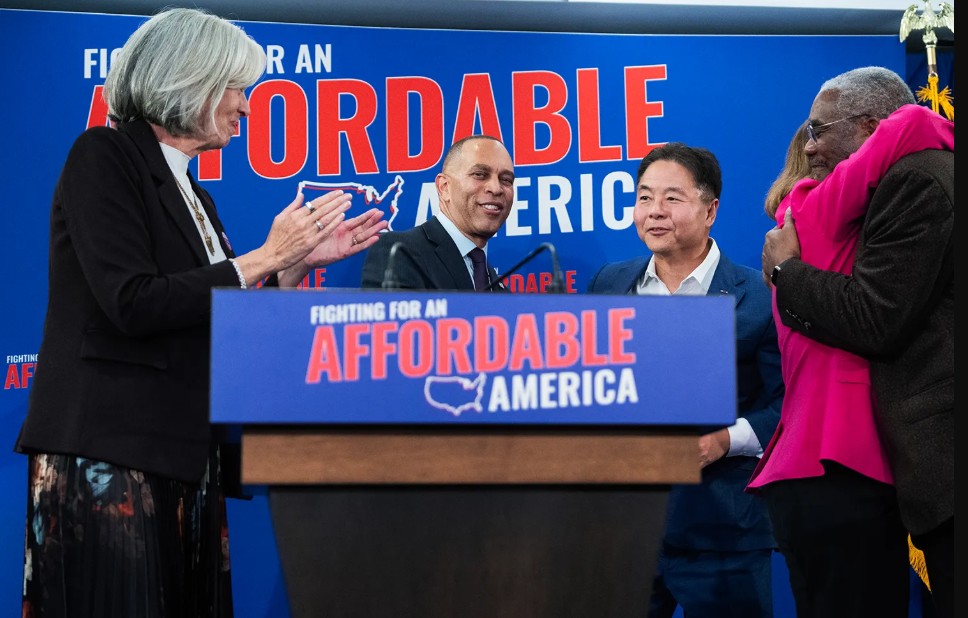
Democrats are preparing an ambitious legislative and oversight agenda following their sweeping victories in the November 3, 2026, midterm elections, which returned control of both chambers of Congress to the party and significantly weakened President Donald Trump’s political influence.
The results represent one of the most consequential midterm setbacks for a governing party in more than five decades, creating a dramatically different political environment for the final two years of Trump’s presidency.
According to data, Democratic leaders intend to prioritize healthcare affordability, economic relief and government accountability rather than immediately pursuing another presidential impeachment. Incoming House Speaker Hakeem Jeffries has identified restoring Affordable Care Act premium tax credits as a leading legislative objective.
These subsidies help millions of Americans manage health insurance expenses, making their continuation especially important for working families. Democrats also plan to challenge Medicaid reductions approved by Republicans in 2025.
Party leaders argue that protecting healthcare coverage is essential to addressing the financial pressures affecting American households. However, Democrats remain divided over the broader direction of healthcare reform. Progressive lawmakers support proposals such as Medicare for All, while moderates favor approaches that preserve more elements of the existing insurance system.
Despite these differences, both groups recognize healthcare affordability as a major political priority. Democratic leaders also intend to confront the administration’s tariffs and other policies they believe have contributed to rising consumer prices.
Senator Chuck Schumer, expected to become Senate majority leader, has emphasized reducing household expenses, improving government performance and addressing alleged corruption. Progressive lawmakers have proposed additional measures targeting price gouging, corporate influence and financial conflicts of interest.
Representative Greg Casar, chair of the Congressional Progressive Caucus, wants Democrats to advance legislation regularly, even when presidential opposition makes enactment unlikely. The strategy could establish a clear legislative record before the 2028 presidential election.
Democratic control of Congress will significantly expand the party’s investigative authority. Representative Robert Garcia, expected to lead the House Oversight Committee, has outlined potential inquiries involving Department of Homeland Security contracts, congressional stock trading, corporate profiteering and the government’s handling of documents connected to Jeffrey Epstein.
Representative Jamie Raskin, who is expected to lead the House Judiciary Committee, has also signaled plans for extensive oversight. Once Democrats assume committee leadership, they can issue subpoenas to seek documents and testimony.
These investigations could intensify scrutiny of the Trump administration and create significant political challenges for the White House. Importantly, the subjects under consideration involve allegations and potential conflicts of interest, not established findings of wrongdoing.
Despite growing calls for accountability, Democratic leaders have indicated that impeaching Trump for a third time is not a current priority. Jeffries has emphasized affordability and oversight rather than impeachment proceedings. The decision reflects political and practical considerations, including the difficulty of obtaining sufficient Senate support to remove a president from office.
Instead, Democrats appear determined to use congressional investigations and legislative proposals to challenge the administration. Although Democrats will control Congress, their authority is not unlimited.
Trump retains presidential veto power, meaning legislation opposed by the White House may require overwhelming bipartisan support. Republicans can also use the Senate filibuster to block many proposals unless Democrats secure 60 votes. These institutional barriers mean negotiations and political confrontations will likely dominate Washington. Democrats also hope their congressional agenda will strengthen the party’s position ahead of the next presidential election.
By advancing legislation focused on economic security and healthcare, they aim to demonstrate their governing priorities while highlighting disagreements with Trump. However, ideological differences between progressive and moderate Democrats could complicate that strategy.
The coming two years will test whether Democrats can transform their historic electoral victory into meaningful policy achievements, stronger government accountability and a persuasive economic vision for America’s future.