American cities and states continue spending billions of taxpayer dollars on professional sports stadiums despite decades of economic research finding that these investments rarely generate the jobs, income growth or tax revenue promised by teams and developers.
The financial stakes are enormous.
Professional sports leagues generate billions of dollars annually, yet teams routinely seek government assistance when constructing or replacing stadiums. Between 1970 and 2020, taxpayers in the United States and Canada contributed approximately $33 billion toward sports facilities, representing roughly 73% of total construction costs during that period.
The trend continues with increasingly expensive projects.
The Buffalo Bills’ new stadium cost approximately $2.1 billion, including $850 million in public funding. The Tennessee Titans are building another $2.1 billion stadium with about $1.2 billion supplied publicly. Tampa officials have pledged $967 million toward a proposed $2.3 billion stadium for the Tampa Bay Rays.
Meanwhile, the planned Washington Commanders stadium is expected to cost approximately $4 billion.
Teams generally justify these subsidies by arguing that new venues will create jobs, attract visitors, increase property values, stimulate nearby businesses and ultimately produce additional tax revenue.
Economic research, however, repeatedly finds much smaller effects.
Studies examining decades of stadium development have found little evidence that subsidized professional sports facilities produce meaningful increases in per-capita income or employment.
One reason is what economists call the substitution effect.
Most stadium customers are local residents rather than tourists bringing entirely new money into the region. When a family spends $500 attending a football game, that money may simply replace spending that would otherwise have gone to restaurants, theaters, museums or other entertainment.
The stadium therefore changes where local residents spend their money without necessarily increasing total economic activity.
Public spending creates a similar trade-off.
Every dollar directed toward stadium construction is money that cannot simultaneously finance schools, roads, emergency services or other government priorities.
Even increased tax revenue around a stadium may fail to compensate taxpayers.
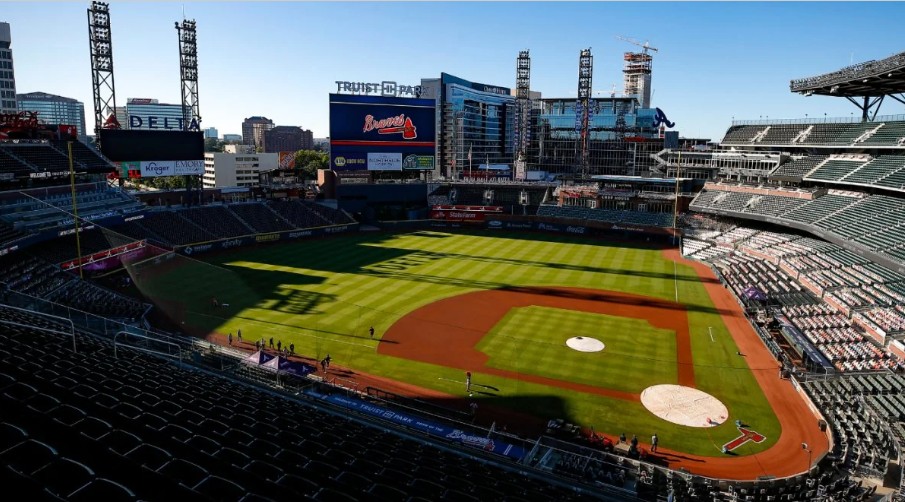
Researchers studying Truist Park, home of the Atlanta Braves, found that although local tax collections increased after the stadium opened, nearby counties experienced similar growth. After debt and other expenses were considered, taxpayers were estimated to be losing roughly $15 million annually.
Another concern involves the economic-impact studies used to justify stadium projects.
Critics argue that these analyses frequently depend on optimistic assumptions about attendance, future economic growth and tax collections.
A proposed soccer stadium in Raleigh, for example, relied on projections assuming stadium-related growth of approximately 11% annually for a decade while attendance would more than double.
The authors argue that such assumptions can make public subsidies appear considerably more profitable than historical evidence suggests.
That does not mean stadiums provide no public value.
Professional teams can strengthen civic identity, create shared cultural experiences and help redevelop particular neighborhoods. Businesses immediately surrounding a stadium may also benefit from increased traffic.
But those benefits are different from demonstrating that a stadium produces enough new economic activity to justify hundreds of millions — or even billions — in taxpayer support.
The debate is becoming increasingly important because many stadiums constructed during the building boom of the 1990s are approaching the roughly 30-year age at which professional teams often begin seeking replacements or major renovations.
Cities may therefore face another wave of subsidy requests.
The central question is not whether Americans value professional sports. They clearly do.
It is whether governments should spend enormous amounts of public money helping highly profitable sports organizations construct increasingly expensive facilities when decades of research suggest the broader economic payoff is usually far smaller than promised.