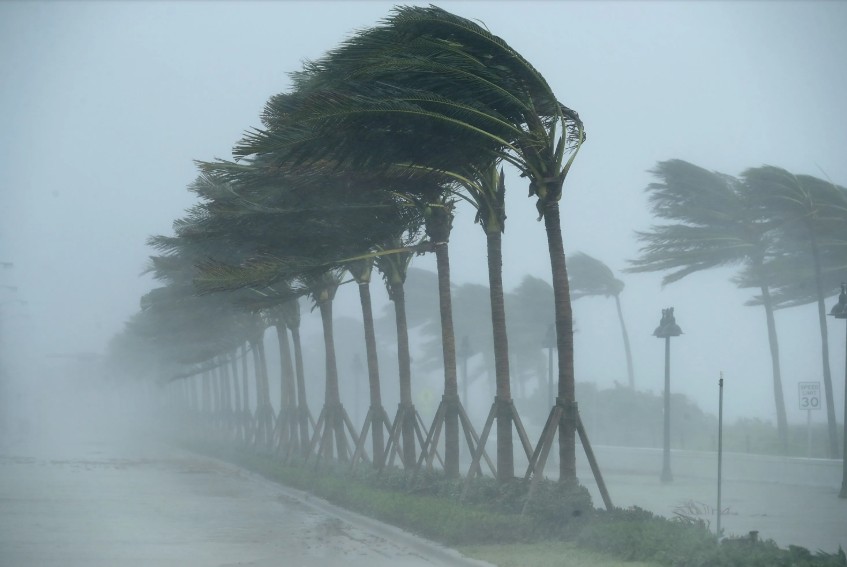
The 2026 Atlantic hurricane season has produced one of the most unusual weather contradictions in recent history: ocean waters remain unusually warm—normally an important ingredient for powerful hurricanes—yet the Atlantic has reached the heart of hurricane season without producing a single hurricane.
The primary explanation is an exceptionally strong El Niño developing in the tropical Pacific.
El Niño occurs when waters in the central and eastern equatorial Pacific become unusually warm, triggering changes in atmospheric circulation around the world. This year’s event is particularly extreme, with Pacific temperatures approaching levels that could make it the strongest El Niño observed in modern records.
Those conditions have dramatically altered the atmosphere over the Atlantic.
Hurricanes require more than warm ocean water. They also need favorable atmospheric conditions, including relatively weak differences in wind speed and direction at different altitudes. When those winds become too strong or change direction sharply—a phenomenon known as vertical wind shear—developing storms can be disrupted before they have an opportunity to organize.
El Niño tends to increase this wind shear across the Atlantic.
Warm Pacific waters encourage powerful thunderstorms and rising air over the Pacific. That alters atmospheric circulation and strengthens upper-level winds extending toward the Atlantic. Those winds effectively tear apart developing tropical systems, preventing thunderstorms from organizing around a stable center.
The result has been a remarkably quiet Atlantic.
By mid-September, the basin had produced several tropical storms but no hurricanes, despite the traditional statistical peak of Atlantic hurricane season occurring around September 10. The absence of hurricanes this late in the season has set a record for the satellite era.
The contrast with the Pacific has been dramatic.
While the Atlantic remained unusually calm, the eastern and central Pacific experienced intense hurricane activity, including multiple powerful storms occurring simultaneously. El Niño helps explain both sides of this meteorological imbalance: conditions become more favorable for tropical cyclones in the Pacific while becoming considerably more hostile in the Atlantic.
But another factor is complicating the picture: the oceans themselves are getting warmer.
Climate change has increased ocean temperatures around the world, providing hurricanes with more potential energy when atmospheric conditions allow storms to form.
That does not necessarily mean climate change will produce more hurricanes every year.
Scientists emphasize that hurricane formation depends on a complicated interaction among ocean temperatures, atmospheric moisture, wind patterns, stability and natural climate cycles such as El Niño and La Niña. A very warm Atlantic can therefore remain quiet when atmospheric conditions strongly suppress storm development.
Researchers are also investigating whether long-term warming could be making parts of the tropical Atlantic atmosphere more stable.
As warm ocean water increases evaporation, thunderstorms transport additional heat and moisture high into the atmosphere. When that moisture condenses, it releases heat, potentially causing the upper atmosphere to warm faster than air closer to the surface.
That reduces the temperature difference between lower and upper levels of the atmosphere.
Because thunderstorms depend on warm air rising, a more stable atmosphere can make it harder for the persistent thunderstorm clusters necessary for hurricanes to develop.
Scientists are examining whether this process could help explain an emerging tendency toward hurricane activity occurring later in the season.
That possibility creates an important warning about 2026.
The extraordinary quiet should not be interpreted as evidence that coastal communities are safe for the remainder of the year.
Atlantic hurricane season officially continues through November 30. As autumn progresses, atmospheric conditions can change, and exceptionally warm waters across parts of the Atlantic, Caribbean and Gulf could provide substantial energy if a storm eventually finds favorable conditions.
History also demonstrates that the overall number of hurricanes in a season does not determine how destructive that season will be.
The classic example is 1992. That year produced relatively few storms, but one was Hurricane Andrew, a Category 5 hurricane that devastated South Florida.
The 2026 season therefore demonstrates why hurricane behavior cannot be explained by ocean temperature alone.
Climate change is increasing the amount of heat available in the oceans, but natural climate patterns such as El Niño can temporarily overwhelm that influence by creating atmospheric conditions hostile to hurricane formation.
The unusual calm in the Atlantic is consequently not evidence that hurricane risk has disappeared. Instead, it provides a striking demonstration of how global warming and natural climate cycles can interact in complicated—and sometimes counterintuitive—ways.