The post-pandemic collapse in demand for traditional office space is creating an unexpected opportunity in some of America’s largest cities: turning underused commercial buildings into places where people actually live.
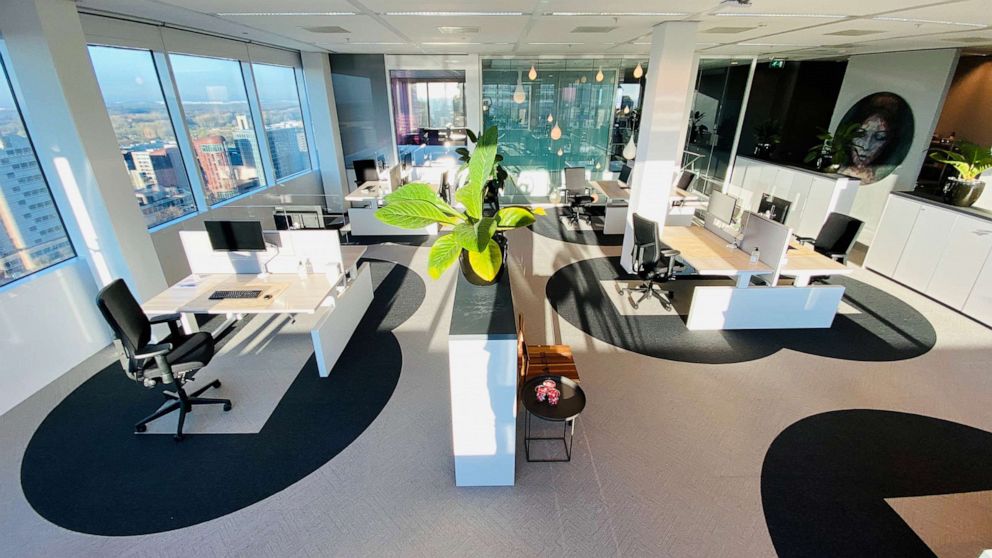
Remote and hybrid work fundamentally altered the economics of downtown office districts. Millions of employees who once commuted five days a week now spend significantly less time in corporate buildings, leaving landlords with high vacancy rates and reducing the value of many older office properties.
At the same time, major American cities continue struggling with another problem: an acute shortage of affordable housing.
That combination has made office-to-residential conversion one of the most closely watched trends in commercial real estate.
The basic idea appears simple. Developers acquire struggling office buildings—sometimes at enormous discounts compared with their pre-pandemic valuations—and transform them into apartments, condominiums or other residential formats.
But conventional conversions can be extremely expensive.
Office towers were designed for companies, not families. Deep floor plates can leave large interior sections far from windows. Plumbing, ventilation, elevators and electrical systems may require major reconstruction. Residential building codes also impose requirements that can make conversion financially impossible.
Developers and architects are consequently experimenting with more radical solutions.
One increasingly discussed concept involves co-living apartments. Instead of converting an office floor into traditional one- or two-bedroom apartments, developers can create smaller private rooms around the building’s exterior, where windows already exist, while placing shared kitchens, bathrooms, lounges and laundry facilities closer to the interior.
This approach could make conversions 25% to 35% cheaper than creating conventional apartments. Projected rents could also be considerably lower, potentially ranging from about $700 per month in cities such as Houston and Albuquerque to around $1,000 in Los Angeles, Seattle and Washington.
For residents, the trade-off would be straightforward: less private space and more shared facilities in exchange for significantly cheaper housing in central urban locations.
For developers, the economics can be attractive for another reason.
Many older office buildings have experienced dramatic declines in value. A property that once commanded premium prices when corporations competed for downtown space may now be available at a substantial discount. Buying cheaply and successfully converting the building can potentially create a valuable residential asset.
Cities also have powerful incentives to encourage the transformation.
Empty offices create problems extending far beyond individual landlords. Fewer workers downtown means fewer customers for restaurants, stores, coffee shops and other businesses. Declining commercial property values can weaken municipal tax revenues, while largely vacant buildings make business districts feel increasingly lifeless.
Adding residents can reverse part of that cycle.
People living downtown need groceries, restaurants, entertainment and services throughout the week—not simply during traditional business hours. Residential conversions can therefore help transform districts designed primarily for nine-to-five workers into genuine mixed-use neighborhoods.
The scale of the opportunity is significant. Approximately 20% of office space in America’s largest metropolitan areas was vacant in 2024, creating an enormous inventory of potentially underused real estate.
Cities are already experimenting.
Chicago recently celebrated the opening of the Bellwether Residences, a conversion of part of a historic downtown office building into 117 apartments, including 41 affordable units. The $64.2 million project received $28 million in city tax-increment financing and was already 57% leased when it officially opened.
But conversions are not a universal solution.
Some buildings simply cannot be economically redesigned for residential use. Others require substantial government subsidies or zoning changes before projects become financially viable. Developers must also determine whether consumers actually want unconventional formats such as co-living, particularly when residents may have to share kitchens or bathrooms with numerous neighbors.
Even successful conversions will not solve America’s housing shortage by themselves.
Still, the trend offers something increasingly rare in urban economics: one crisis potentially helping alleviate another.
The pandemic left cities with millions of square feet of unwanted office space. The housing affordability crisis has left millions of Americans searching for less expensive places to live.
Connecting those two problems could reshape downtown America.
What was once considered distressed commercial real estate is increasingly being viewed as raw material for a different kind of city—one where the phrase “living at the office” may no longer describe working too much, but actually having an affordable home in a building originally designed for work.